
 Log into your account
 Register

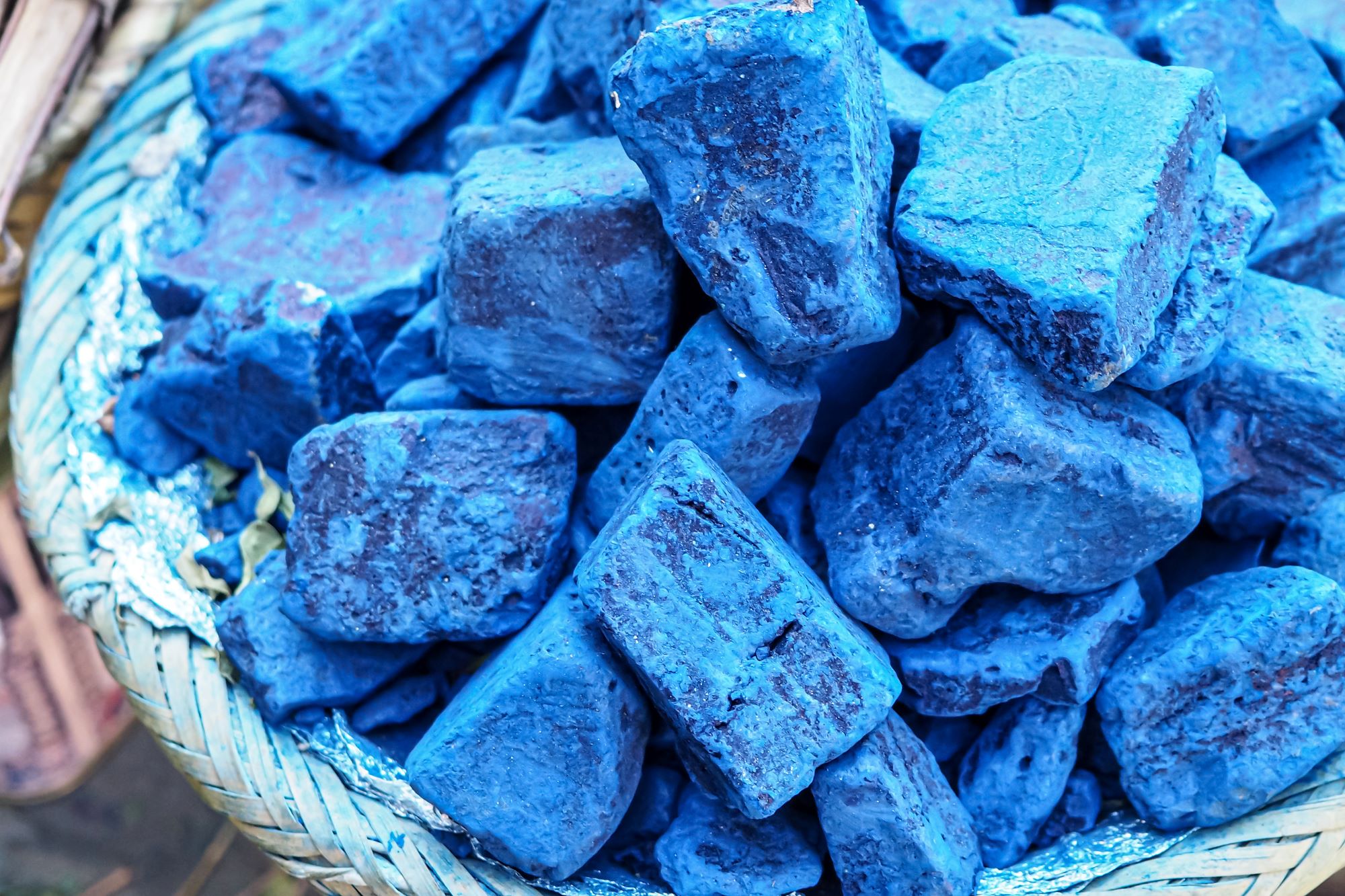


Denim owes its iconic blue hue to indigo, the remarkable dye that has shaped its identity. Once referred to as “blue gold,” indigo has historically symbolized power and prosperity, often reserved for royal and ceremonial attire. Extracted from the fermented leaves of the Indigofera plant, this pigment has traversed through millennia and across continents, coloring textiles and enriching stories and civilizations. Today, every pair of jeans embodies a rich cultural heritage, woven from artisanal traditions, influenced by global trade routes, and shaped by industrial revolutions—a fascinating journey that begins with a plant and ends at the heart of our wardrobes.
What’s indigo?
Indigo is the color of jeans! It is a plant-based pigment used as a vat dye since ancient times. Vat dyes contain substances that are typically insoluble, which must be transformed into a soluble form for dyeing. In the late 19th century, Adolf von Baeyer developed a synthetic indigo to simplify production, reduce costs, and enable large-scale use.
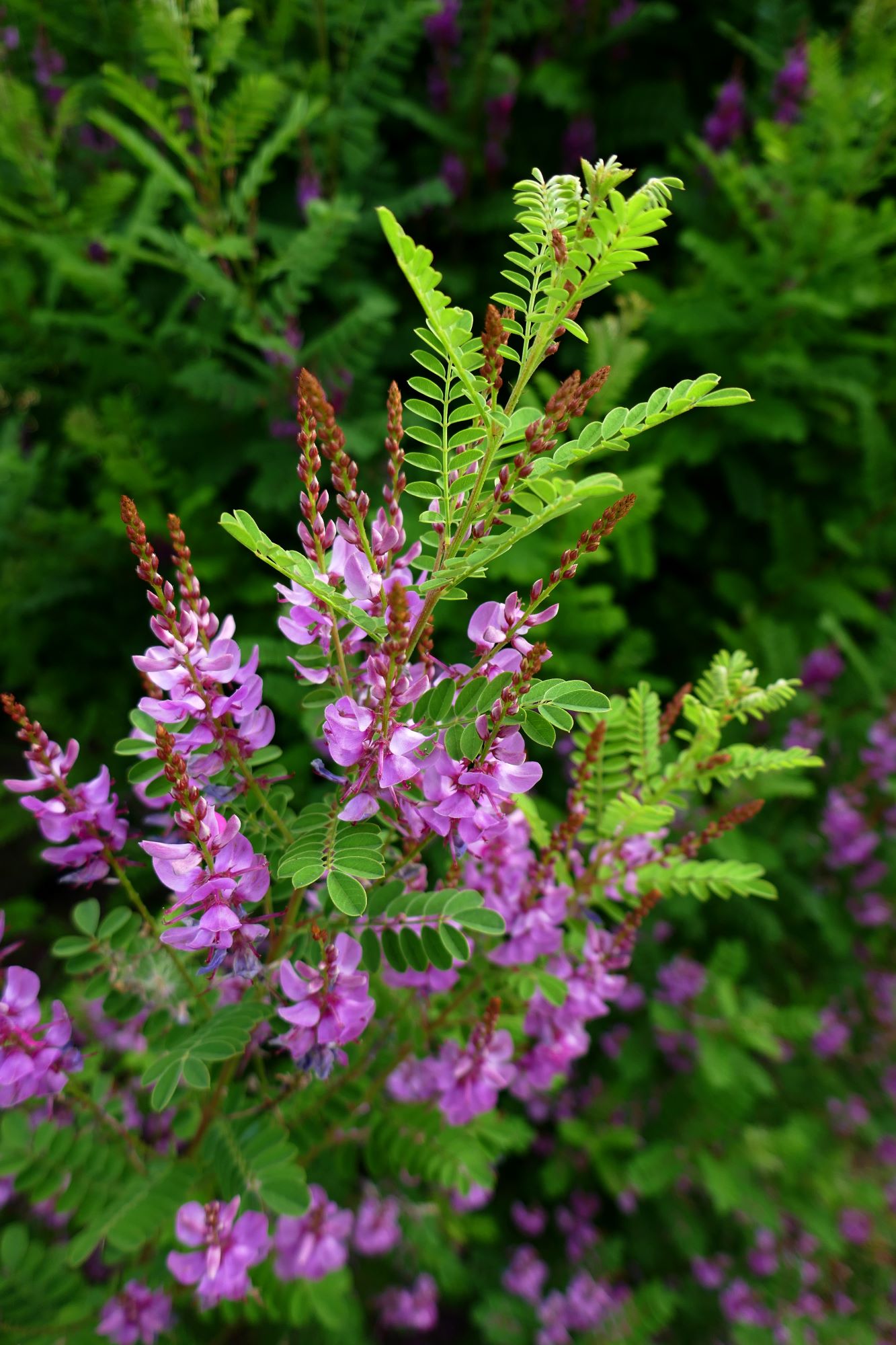
Natural indigo is extracted from Indigofera leaves. The Swedish botanist Carl Linnaeus officially named the Indigofera genus in his 1753 work, “Species Plantarum.” However, many civilizations worldwide had already been using indigo for thousands of years to dye textiles and create artworks. The oldest indigo-dyed textile, dating back over 6,000 years, was discovered at Huaca Prieta in Peru, one of South America’s earliest known human settlements.
Where does indigo come from?
Plants in the Indigofera genus belong to the legume family and include over 750 species. They can grow taller than 1.80 meters and are characterized by oval, feather-like leaves. Indigofera thrives in tropical climates; in the Indian subcontinent, Indigofera tinctoria—commonly referred to as “true indigo”—is especially prevalent, while Indigofera suffruticosa is predominantly found in Central and South America. “Indigo” comes exactly from the Latin word “indicum,” meaning “from India.”
How is indigo produced?
Indigo dye is produced by fermenting the leaves of the Indigofera plant, resulting in a yellowish liquid that turns a deep violet-blue when oxidized in open vats. After oxidation, the water is evaporated to collect the sediment that settles at the bottom, which is then sold as solid indigo.
The use of indigo in ancient civilizations
Indigo is not native to Europe but has been known in the Mediterranean for millennia. Indigo-dyed bands have been discovered in Egyptian textiles from the Fifth Dynasty. Its use was also documented by both Greek and Roman civilizations, who obtained the pigment through Arab traders. Pliny the Elder notably described indigo as a product of India. Still, its use remained rare due to high costs and the difficulty of importation.
Many scholars believe that the people of the Middle East were among the first to recognize and utilize the properties of the Indigofera plant. Its cultivation likely spread from the Indus Valley, now part of Pakistan and northeast India. Records indicate that indigo was used in China around 3000 BCE, and Marco Polo described its use in India during the 13th century.
In the Andean region, the Inca used indigo to dye textiles, bodies, and pottery. The Maya created their signature “Maya Blue” by mixing fermented Indigofera leaves with clay to decorate sculptures, walls, and ceramics. The Aztecs dyed luxurious fabrics, including the emperor’s cloak, with indigo and used Indigofera as a medicinal plant to treat various illnesses.
Indigo during the colonial period
In later centuries, the cultivation of indigo was influenced mainly by European colonial interests. As previously noted, Indigofera had been grown in the Americas for thousands of years before the arrival of the Spanish. They recognized the large-scale production of indigo as a significant opportunity to compete with the Portuguese, who had begun importing indigo from Goa to Europe in the early 16th century.
Consequently, Europe started importing indigo from modern-day Guatemala in the 16th century. By the 18th century, Venezuela and Mexico had also developed extensive Indigofera plantations. Around the same period, the French and British introduced indigo cultivation to the Caribbean, particularly in Haiti and Jamaica. The traditional knowledge of enslaved Indigenous peoples and Africans was crucial in making these plantations highly profitable for European colonists.
The importance of indigo in Europe
In 1498, the Portuguese explorer Vasco da Gama discovered a new sea route between India and Europe, making it easier to import indigo without relying on Arab intermediaries. Prior to this, Europe primarily used a native plant called woad to produce blue dye. As a result, the introduction of indigo across the continent was slow, and resistance was faced. Between the 16th and 17th centuries, woad producers even referred to indigo as “the devil’s dye” and threatened death to anyone who used it.
English dyers were hesitant to replace woad with indigo, despite the latter’s superior dyeing properties for cotton and flax. In France, indigo was banned to protect the domestic woad industry; however, the aristocracy’s obsession with the color blue led many to ignore the ban, which was ultimately lifted in 1737. Consequently, France gained a monopoly over indigo, which was even used for Napoleon’s extensive military uniforms.
How is indigo used on denim
Italy emerged as one of the leading European hubs for Eastern imports, including indigo, as early as the 16th century. Genoa, in particular, was one of the most important ports in the world at that time. This combination of factors allowed Genoese fustian to stand out among its European competitors. Unlike other affordable and durable fabrics, Genoese fustian was made with a cotton weft and indigo-dyed warp, making it the actual ancestor of contemporary denim. Sailors and dockworkers wore it for its strength and practicality. Experts estimate that, today, approximately three to five billion denim garments are produced each year, requiring around 66,000 tons of powdered indigo.
From U.S. independence to India’s
In the 18th century, indigo cultivation made its way to the southern United States, especially in South Carolina, largely due to a temporary decline in the colony’s main crop: rice. Indigo quickly became more profitable than cotton and sugar. Between the second decade of the century and its end, indigo exports from the U.S. to Europe increased sixfold. The pigment was so valuable that it was even used as a currency during the American Revolution.
After the British withdrew from the U.S. following the war, they turned back to India as a source of raw materials and cheap labor. There, too, the traditional knowledge of indigo cultivation was exploited for colonial profit. Indigo became one of the most lucrative goods for the two major commercial empires of the era: the British East India Company and the Dutch East India Company.
In 1859, Bengali farmers revolted against British exploitation in the Indigo Revolt, which consisted of a coordinated series of mostly nonviolent protests and petitions that aimed for better working conditions on local plantations. This rebellion was one of the early events that ultimately contributed to India’s independence nearly a century later and the end of British colonial rule.
What is synthetic indigo?
The process of extracting indigo from Indigofera leaves may seem straightforward, but it is actually complex and labor-intensive. This complexity makes the invention of synthetic indigo a true revolution. In the late 19th century, German chemist Adolf von Baeyer first synthesized indigo and won the Nobel Prize in Chemistry in 1905 for his work.
Synthetic indigo made this dye even more accessible, leading to a significant decline in Indigofera plantations worldwide. This pigment could be produced on a larger scale more easily and at a lower cost than that extracted from Indigofera, while also achieving a high concentration for a deeper, more stable color.
Today, the denim industry uses both traditional powdered indigo and pre-reduced indigo, which is treated to make it water-soluble. All forms of indigo are poorly soluble in water and require additional substances to bond with the fibers. However, pre-reduced indigo is preferred for environmental reasons, as it reduces the use of sodium hydroxide and dithionite compared to powdered indigo, which remains popular due to its lower cost.
Returning to natural indigo
In recent years, there has been a growing interest in returning to natural indigo, both for its environmental benefits and for the vibrant, authentic blues that synthetic dyes cannot replicate. Indigofera plants can sequester carbon in the soil and fix nitrogen in the atmosphere, enhancing soil quality and helping to mitigate climate change. This makes Indigofera especially suitable for regenerative agriculture.
FAQs about synthetic indigo vs natural indigo
How are they produced?
Natural indigo is extracted from the leaves of the Indigofera plant through fermentation, while synthetic indigo is typically produced in a laboratory, often starting with aniline.
What’s the impact of the production process?
Indigofera plants can have positive environmental effects. Their plant-based origin makes natural indigo biodegradable and eco-compatible. However, cultivating these plants requires extensive fields and may require water during prolonged droughts. In contrast, synthetic indigo is produced through energy- and chemical-intensive processes. This method requires careful management and disposal of the chemicals involved to prevent harm to the environment and public health.
Is the dyeing process the same?
While natural and synthetic indigo differ in their characteristics, the denim dyeing process remains consistent regardless of the pigment used. Synthetic indigo is available on the market in solid form or pre-reduced form. The latter is typically more expensive but reduces the need for additional chemicals, such as sodium hydroxide and hydrosulfite, in the dyeing process.
Do they yield the same indigo hues?
The color of synthetic indigo can differ from that of natural indigo. Synthetic indigo usually offers a deeper, more uniform, and standardized shade, ensuring consistency across production batches when all other conditions remain constant. Additionally, it is generally less expensive and available in large quantities for mass production. In contrast, natural indigo is a living substance that yields a vibrant shade, often lighter than synthetic indigo. Its hues are unique, irregular, and nuanced, making uniformity more unpredictable. Consequently, natural indigo is often used for limited and more artisanal production runs in the denim industry.